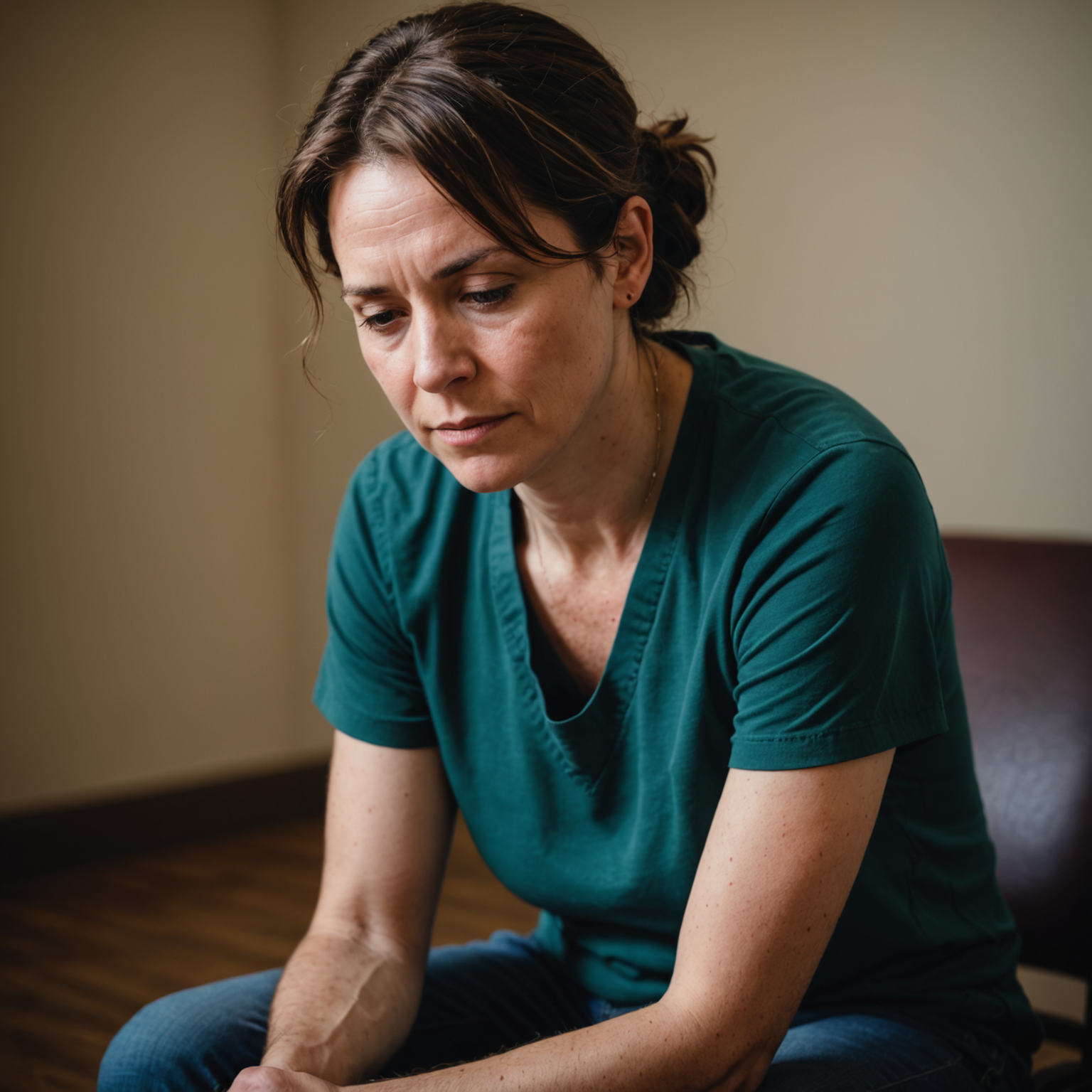
Maya sits across from you, her posture rigid, eyes scanning the room rather than meeting yours. She’s a high-performing executive who manages global teams, yet she describes an internal sensation of "brittleness"—the feeling that she is constantly one minor feedback loop away from shattering. She isn’t grieving a single event; she is navigating the invisible architecture of a childhood defined by unpredictability. For clients like Maya, the "foundational wound" isn't a scar from a singular trauma, but the absence of a secure base during critical developmental years.
Working with Complex PTSD (C-PTSD) requires us to shift from a focus on "what happened to you" to "how you learned to survive." When the nervous system is mapped for danger in early life, the adult brain interprets intimacy as invasion and autonomy as abandonment. As counselors, our goal isn't to help them "get over" the past, but to help them build a physiological safety net in the present.
To move the needle, we must integrate somatic awareness into our cognitive work. Start with titrated pendulation. When a client triggers into a flashback, don’t push for deep processing. Instead, ask them to identify a neutral object in the room, name its texture, and then track the shift in their breath. This bridges the gap between the chaotic internal state and the external, safe reality.
Secondly, utilize The Window of Tolerance framework. By psycho-educating clients on their own nervous system states—hyperarousal (anxiety) vs. hypoarousal (numbness)—we empower them to become their own observers. Teach them to recognize the "telltale signs" before they exit the window. If Maya notices her jaw clenching, that is the cue to pause and engage in a grounding technique before the dissociative crash occurs.
In practice, consider this: I once worked with a client who would go silent every time I offered praise. Instead of analyzing the silence, I pivoted. I said, "I notice that when I acknowledge your progress, your body seems to hold its breath. Can we stay with that sensation for a moment?" By labeling the somatic response rather than the content of the praise, we unlocked a core belief: that being "seen" was historically linked to criticism. This allowed us to gently re-parent that reaction in real-time.
Thirdly, implement collaborative goal-setting. C-PTSD often stems from a loss of agency. By offering the client choices—where to sit, the pace of the session, or even the choice to defer a difficult topic—we are actively healing the foundational wound of powerlessness. You are not just a listener; you are a partner in restoring their autonomy.
As you head into your next session, remember that your presence is the primary clinical tool. Complex trauma creates a world where nobody is safe; by being consistently attuned, boundaried, and predictable, you become the corrective experience your client has been waiting for. Your takeaway today is this: don’t rush to process the trauma narrative. First, build the container—the somatic and relational safety—that allows the trauma to be safely metabolized, one small, regulated step at a time.