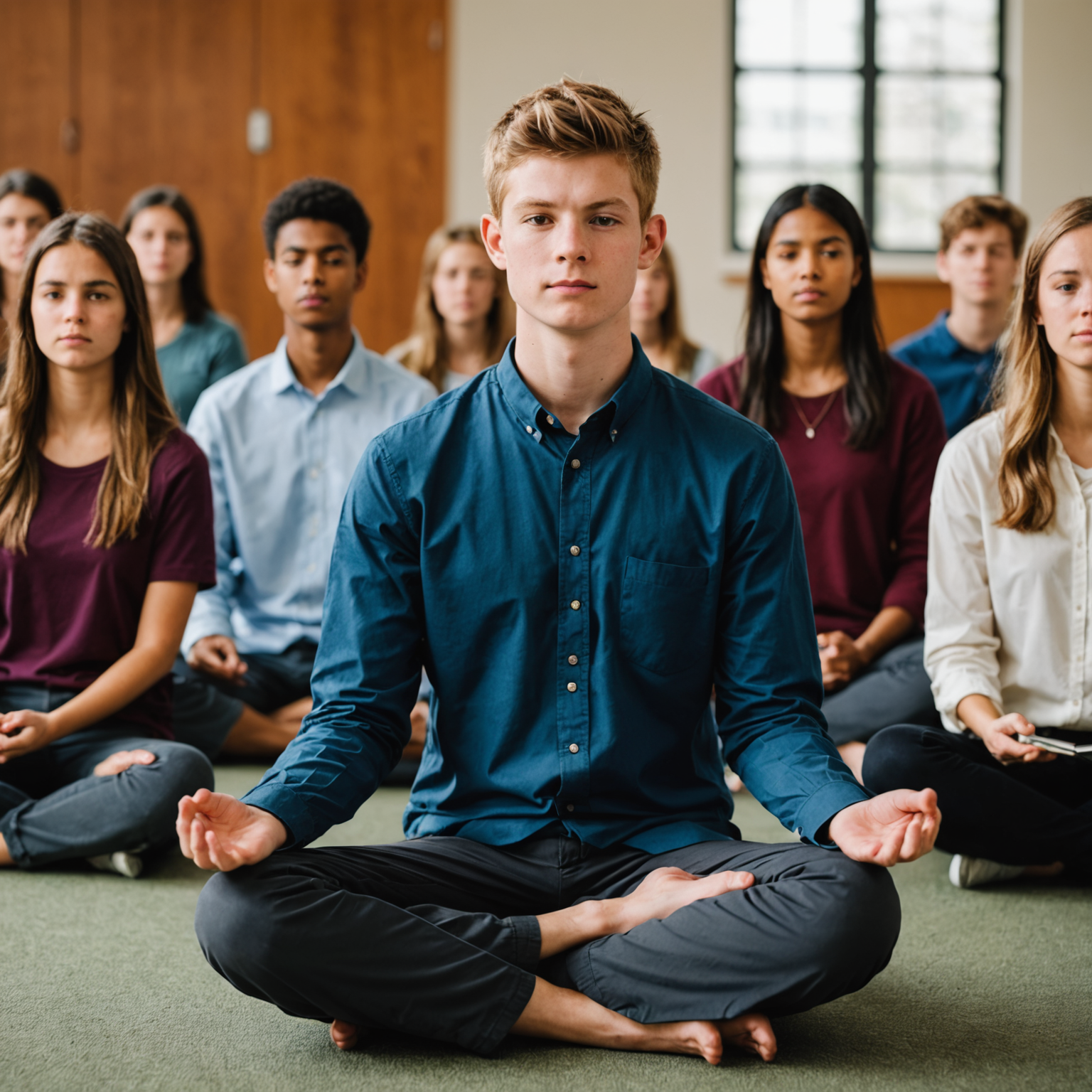
The frantic ping of a phone notification jolts Maya awake, a digital alarm clock that’s already catapulted her into a whirlwind of assignments, extracurriculars, and the ever-present social pressures. Before her feet even hit the floor, her mind is a chaotic swirl of to-do lists and anxieties. This isn't an isolated incident; it's the daily reality for countless students navigating the intense landscape of high school. They’re bombarded, stretched thin, and often feel like they’re constantly playing catch-up, leaving little room for calm or introspection. As counselors, we see this overwhelm firsthand, and it’s our role to equip them with tools that don’t require hours of dedicated practice, but can be woven into the fabric of their busy lives.
Enter the "Zen Zone Blitz"—micro-interventions designed to inject moments of calm and clarity into a high-octane schedule. The core principle here is accessibility. We’re not asking them to meditate for an hour each day; we’re offering bite-sized strategies that can be deployed in seconds, during transitions, or even while waiting for the bus.
One powerful technique is the "Anchor Breath." This involves guiding students to focus on their breath for just three conscious inhalations and exhalations. The simplicity is its strength. During a stressful moment, like before a big test or a difficult conversation, they can close their eyes (or just soften their gaze), take a deep breath in through their nose, feel their belly expand, and exhale slowly through their mouth. Repeating this just three times can interrupt the stress response, bringing the nervous system back to a more regulated state. It’s a quick reset button for their internal chaos.
Another highly effective strategy is the "Sensory Scan." This encourages students to briefly tune into their immediate surroundings using their senses. It’s a form of grounding that pulls them out of their rumination and into the present moment. We can teach them to quickly identify: three things they can see, two things they can hear, and one thing they can feel (like their feet on the floor or the texture of their clothes). This engages different parts of the brain, diverting attention from overwhelming thoughts and re-centering them.
These "blitz" techniques tap into the essence of Mindfulness-Based Stress Reduction (MBSR) principles, which highlight the efficacy of present moment awareness in mitigating stress and improving emotional regulation. It’s about building resilience through small, consistent acts of self-awareness.
Consider Liam, a sophomore struggling with anxiety. During a counseling session, we practiced the Anchor Breath. The next week, he reported that before a particularly challenging math quiz, he remembered the Anchor Breath. He took those three breaths, and while he was still nervous, he felt a distinct shift – a moment of calm that allowed him to focus better on the questions. It wasn't a magic cure, but it was a tangible tool that made a difference.
Our goal as counselors is to empower students with these accessible, practical tools. Encourage them to view these "Zen Zone Blitzes" not as another item on their to-do list, but as an essential form of self-care, a quick recharge in their demanding days.
Actionable Takeaway for Counselors: Integrate one "Zen Zone Blitz" technique—like the Anchor Breath or Sensory Scan—into your next individual or group session, demonstrating its simplicity and immediate applicability. Encourage students to experiment with it during moments of mild stress and report back on their experience.